9 hr
Plitvice Lakes & Rastoke Day Trip from Zagreb
- Expert local guide
- Small group
- Skip-the-line access
- Free cancellation
Zagreb to Plitvice Lakes Day Trip — UNESCO Waterfalls & Rastoke Village
Sixteen cascading lakes, travertine barriers, two-hour drive through Croatian highlands
Compare fares, pick the fit — all bookings are mobile-voucher and eligible for free cancellation where shown.
9 hr
10 hr
10 hr
Selecting the right ticket for your zagreb to plitvice lakes day trip is essential for managing your visit to this UNESCO heritage landmark. These official park access options ensure you can enjoy the park's electric boat and panorama train services.
| Standard Ticket Park Entry Only |
Top pick Guided Day Tour Full-Service Zagreb to plitvice lakes day trip tour |
|
|---|---|---|
| Park Admission | Included (40 EUR) | Included in package |
| Transport from Zagreb | Not included | Included (round-trip) |
| Expert Commentary | Not included | Included |
| Boat & Train Access | Included | Included |
| Wait Time | Depends on arrival | Skip-the-line access |
| Best for | Independent explorers | First-timers and planners |
| See tickets & prices |
Verdict: For a stress-free zagreb to plitvice lakes day trip tickets experience, we recommend the Guided Day Tour to guarantee your entry during peak hours.
Worth it for nature lovers seeking UNESCO beauty
A zagreb to plitvice lakes day trip delivers access to one of Europe's most pristine natural reserves—16 terraced lakes connected by waterfalls, framed by beech and fir forest. Guided group tours from Zagreb handle the 140 km drive each way, typically including transport, park entry (the 40 EUR conservation fee during peak season), and a walking route through the lower or upper lakes. Private options offer flexible departure times and personalized pacing. The catch: you'll spend roughly five hours on the road for three to four hours inside the park. That ratio works if cascading turquoise pools and wooden boardwalk trails align with your interests. Day trips often pair the lakes with Rastoke village, adding a second waterfall stop without extending park time. For travelers prioritizing convenience over multi-day immersion, zagreb to plitvice lakes day trip tours solve logistics while preserving a full day in Zagreb before or after.
Bottom line: The journey pays off if you value effortless access to cascading lakes over extended on-site time.
They complement each other; most visitors who do both call the Plitvice Lakes day trip the more thrilling natural experience.
|
Top pick Plitvice Lakes Day Trip |
Ljubljana & Lake Bled Tour | |
|---|---|---|
| Primary Attraction | Cascading waterfalls and lakes | Alpine lake and castle |
| Typical Duration | 10–11 hours | 10–11 hours |
| Travel Intensity | 2.5 hours each way | 2.5 hours each way |
| Landscape Focus | Travertine-carved forest canyons | Alpine mountains and vistas |
| Walking Requirements | Moderate to High | Low to Moderate |
| Best For | Nature and photography enthusiasts | City sightseeing and scenery |
| See tickets & prices |
Verdict: Choose the zagreb to plitvice lakes day trip for immersive, UNESCO-listed wilderness, or select the Slovenia tour to combine capital-city culture with a postcard-worthy alpine lake via our various zagreb to plitvice lakes day trip tours and zagreb to plitvice lakes day trip tickets.
Hand-picked experiences loved by thousands of travelers
10 hours
Free Cancellation
Discover Croatia's UNESCO-listed cascades and a historic watermill hamlet on this all-day guided adventure.
10 hours 30 minutes
Free Cancellation
Journey to Croatia's stunning UNESCO-listed natural wonder with cascading waterfalls and turquoise pools
10 hours
Free Cancellation
Discover Croatia's stunning UNESCO heritage site with cascading waterfalls and emerald lakes on this guided adventure
10 hours
Free Cancellation
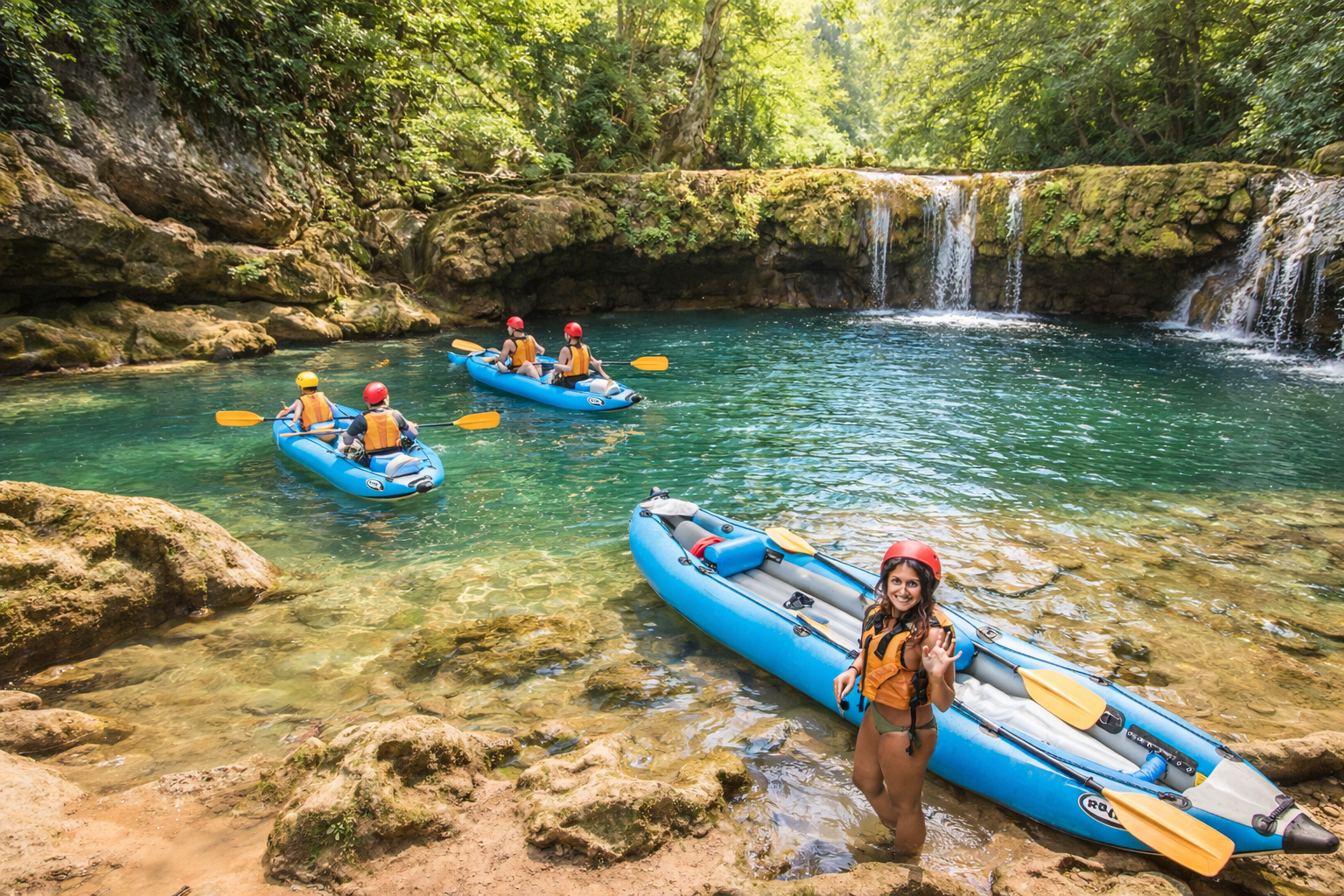
Hike through Croatia's iconic national park, then paddle and swim in pristine turquoise waters nearby
12 hours
Free Cancellation
Combine your journey to the coast with a guided exploration of Croatia's most spectacular waterfall park
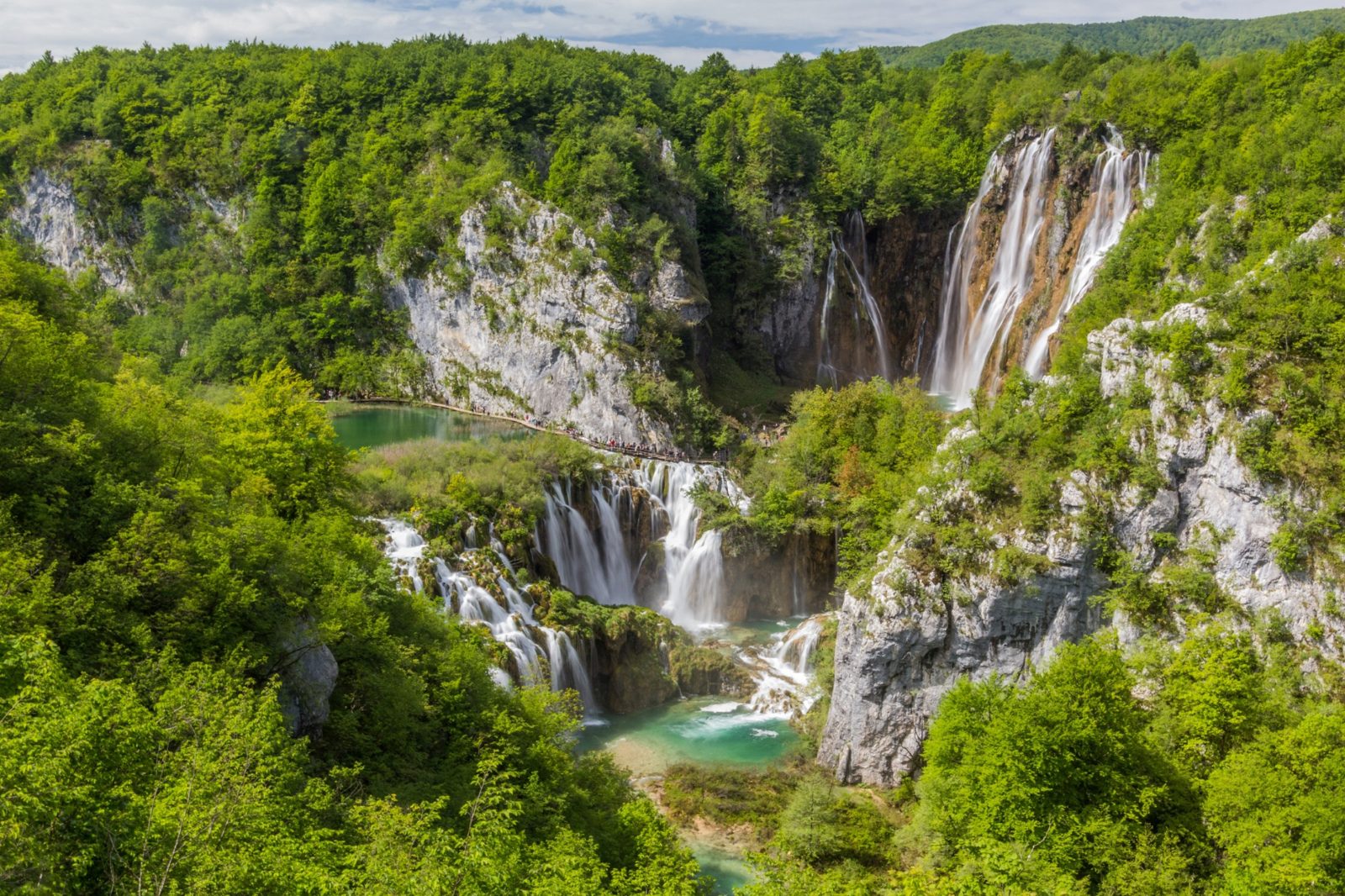
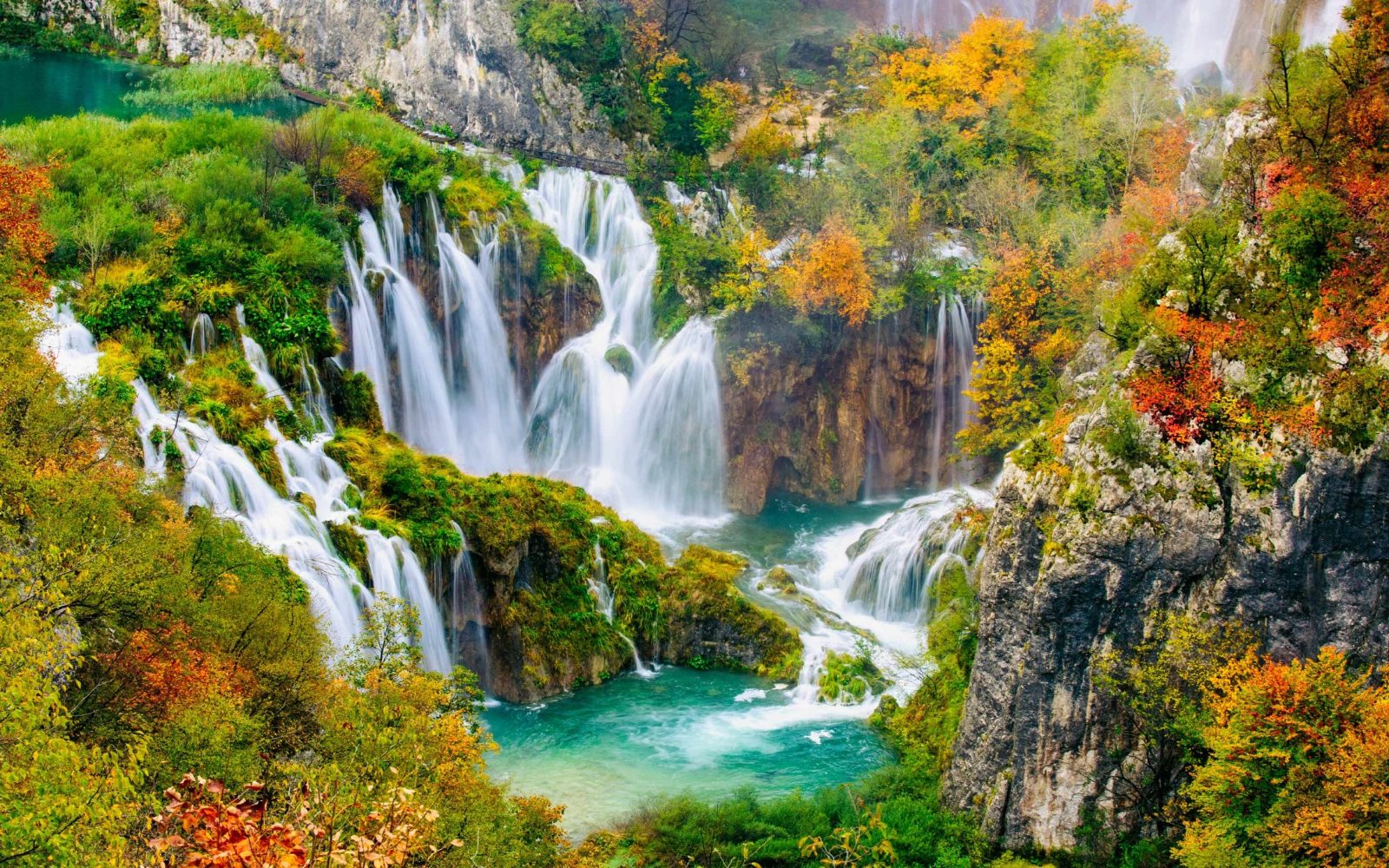
The largest waterfall stands at 78 meters high and marks the end of the lower lakes section.
This is the deepest lake in the park, spanning 47 meters at its deepest point.
The highest lake in the system, fed by the Matica river, sits at an elevation of 636 meters.
Famous for its turquoise hues and proximity to the lower waterfalls, this lake is highly photogenic.
A significant waterfall in the upper lakes area that creates a transition between several pools.
All the details about your upcoming adventure in one place
Plitvice Lakes National Park entered UNESCO's World Heritage register in 1979, three decades before Croatia joined the European Union.
The sixteen interconnected lakes descend 133 metres through forested karst terrain, separated by natural travertine dams that grow roughly one centimetre per year as calcium carbonate precipitates from the mineral-rich water. The park's 296.85 square kilometres shelter brown bears, wolves, and 157 bird species, though most visitors encounter only the wooden boardwalks threading the lower and upper lake basins.
A Zagreb to Plitvice Lakes day trip covers approximately 140 kilometres each way, passing through the Lika region's limestone plateaus and oak-beech forests. The park opens at 07:00 during peak months, and guided tours typically depart the capital between 07:30 and 08:00 to secure entry before mid-morning crowds arrive. Many operators pair the waterfalls with a stop in Rastoke, a mill village 30 kilometres north where the Slunjčica River fractures into dozens of channels before joining the Korana.
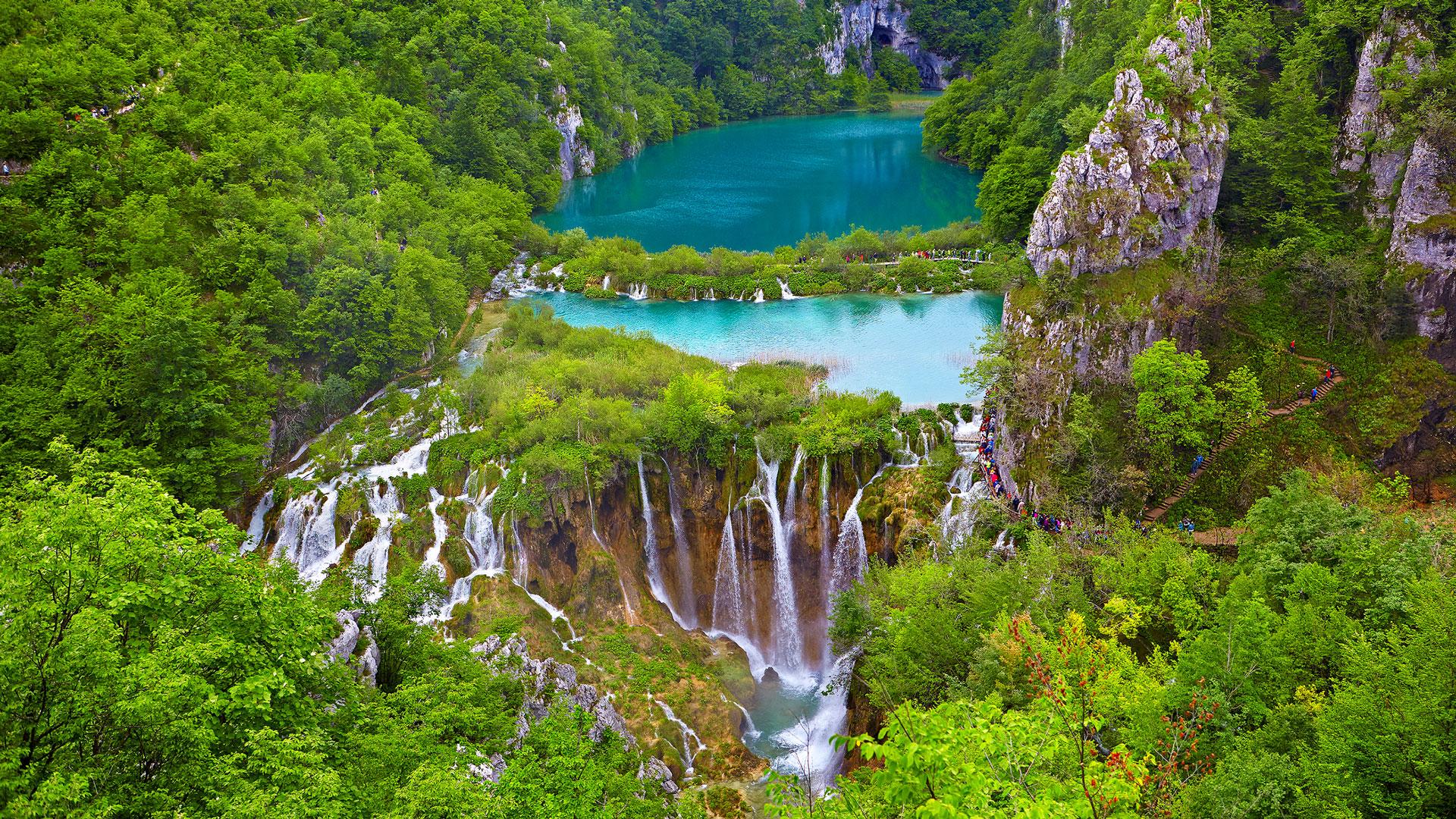
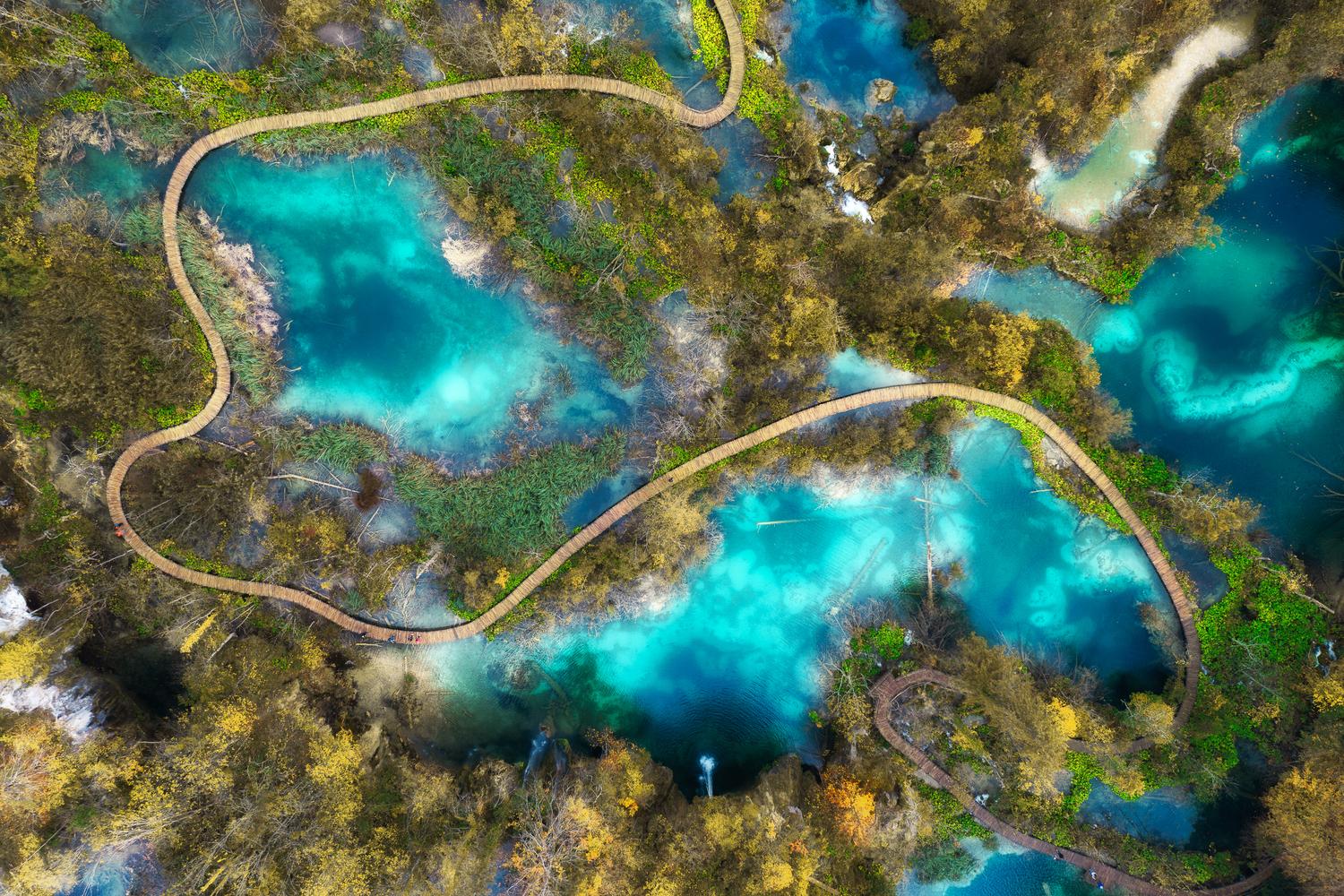
Plitvice's fame rests on travertine barrier lakes — a hydrological process where moss, algae, and bacteria accelerate the deposition of calcium carbonate into porous rock curtains. Water spills over these barriers in sheets and threads, creating the stepped cascade effect visible from the boardwalks. The chemistry shifts with rainfall, snowmelt, and leaf litter, so the lakes' turquoise and emerald hues fluctuate weekly. Winter freezes lock the upper falls into ice sculptures, while spring floods submerge sections of the wooden pathways, forcing seasonal route adjustments.
Most itineraries allocate four to five hours inside the park, with return arrival in Zagreb by early evening. The national park prohibits swimming, drones, and off-trail walking, regulations enforced by rangers stationed at trail junctions and boat docks.

Travertine barriers grow one centimetre per year as calcium carbonate precipitates from mineral-rich water.
Cancellation terms depend on your specific tour provider's policy. Refunds for the 40 EUR conservation fee are generally not provided by the park for individual ticket purchases.
Weather · crowds · average price — dots go green to amber to red as each metric rises.
Moderate crowds with vibrant, high-water flow and blooming vegetation.
Peak tourist season with warm weather, perfect for a full-day zagreb to plitvice lakes day trip.
Foliage transforms the park; cooler temperatures offer comfortable hiking conditions.
Park landscape is serene and often covered in snow, though certain trails may close.
Begin your zagreb to plitvice lakes day trip between 07:00–09:00 to maximize time.
Focus on the H or K routes for a comprehensive zagreb to plitvice lakes day trip experience.
Ensure your shoes are broken-in before your zagreb to plitvice lakes day trip.
Refill your bottle at designated spots during your zagreb to plitvice lakes day trip.
Download the official map for your zagreb to plitvice lakes day trip offline usage.
The travertine barriers that define Plitvice Lakes began forming approximately 12,000 years ago, when calcium carbonate-rich water flowing over moss and algae deposits created the stepped cascade system visible today. Geological surveys in the early twentieth century confirmed that the tufa dams continue to grow at rates between one and three centimeters annually, reshaping lake contours over human timescales. By the nineteenth century, local communities recognized the ecological significance of the sixteen interconnected lakes, though logging and agricultural expansion threatened the basin's integrity. Formal protection arrived on April 8, 1949, when Yugoslavia designated Plitvice as the nation's first national park, covering 19,462 hectares of karst terrain. The decree followed decades of advocacy by Croatian naturalists who documented endemic species and fragile hydrological processes. Infrastructure development began in the 1950s with wooden walkway construction, allowing controlled visitor access without damaging the moss-covered travertine formations that sustain barrier growth. By 1979, UNESCO inscribed the park on the World Heritage List, citing its outstanding natural beauty and ongoing geological processes. The Croatian War of Independence brought devastation between 1991 and 1995, when the park became a front-line zone. Landmines littered trails, hotels burned, and visitor numbers collapsed to near zero. Demining operations continued until 1998, and restoration of damaged walkways and facilities extended into the early 2000s. Tourism rebounded steadily, reaching pre-war levels by 2005 and surpassing one million annual visitors by 2011. Today, zagreb to plitvice lakes day trip tours operate year-round, with peak-season conservation fees supporting ongoing barrier monitoring, invasive species control, and trail maintenance that preserves the fragile tufa ecosystems central to the park's geological identity.
Travertine barrier formation begins through calcium carbonate deposition on moss and algae substrates.
Yugoslavia declares Plitvice the nation's first national park on April 8, protecting 19,462 hectares.
UNESCO inscribes Plitvice Lakes on the World Heritage List for outstanding natural phenomena and geological processes.
Croatian War of Independence halts tourism, damages infrastructure, and leaves landmines across park terrain.
Demining operations conclude, enabling safe reopening of trails and visitor facilities.
Annual visitor numbers surpass one million, driven by restored infrastructure and international recognition.
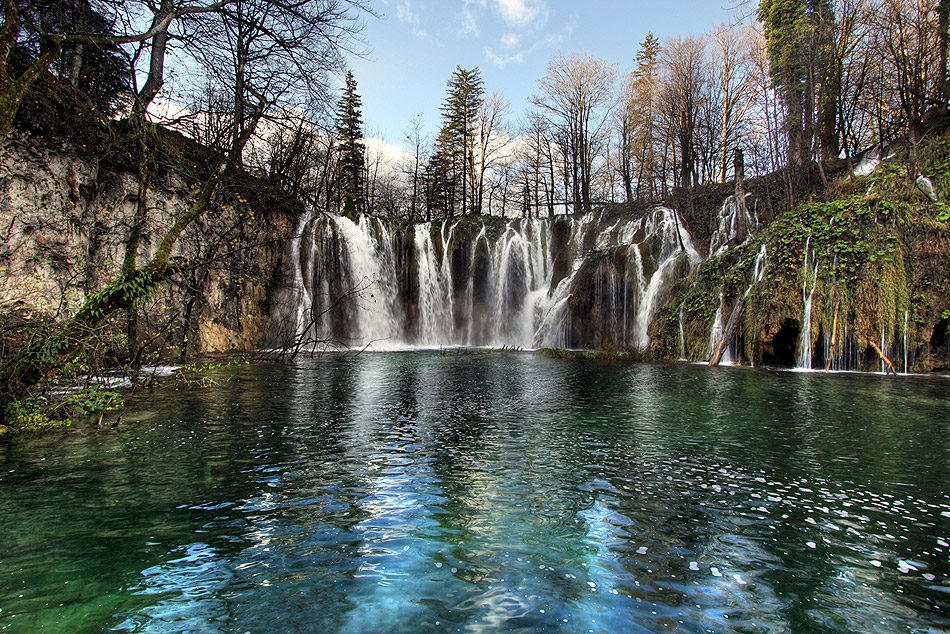
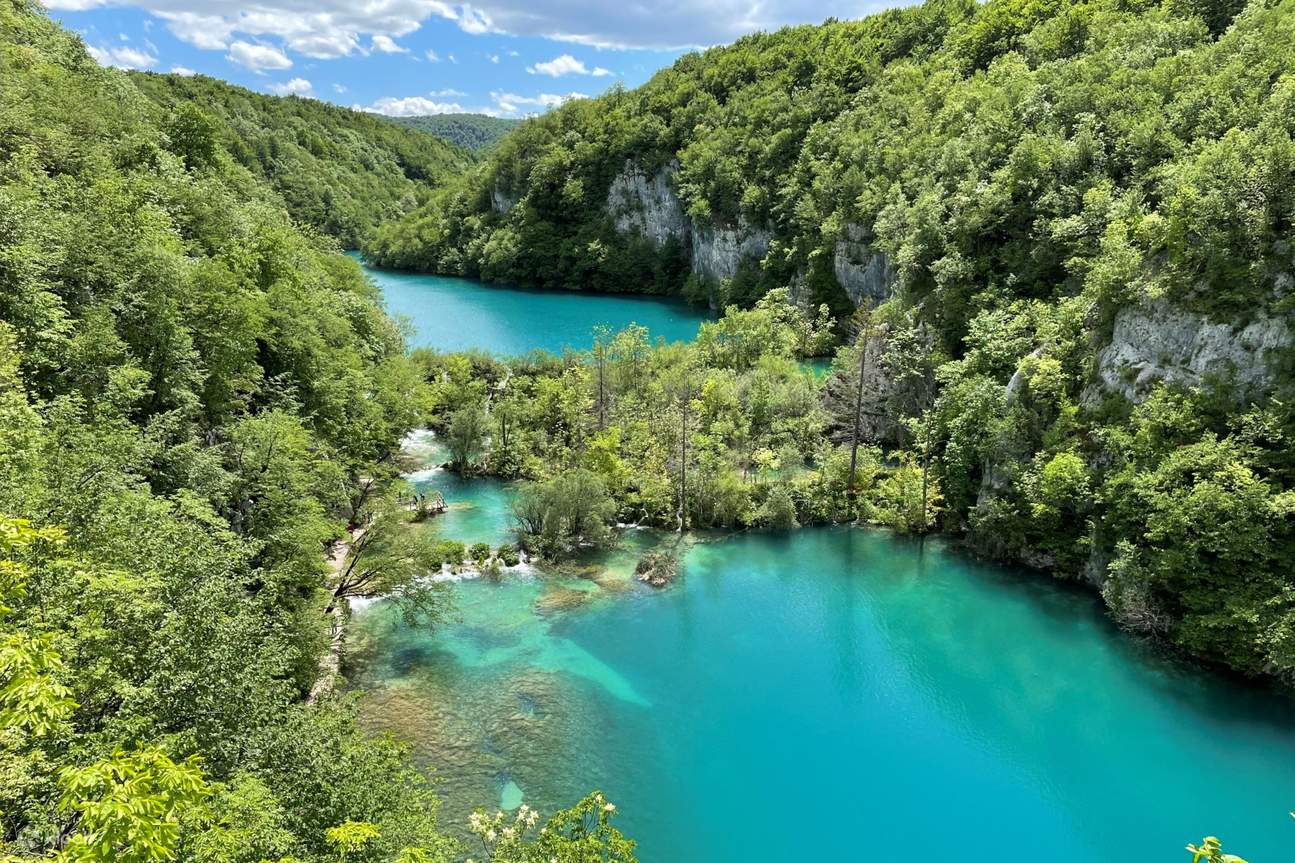
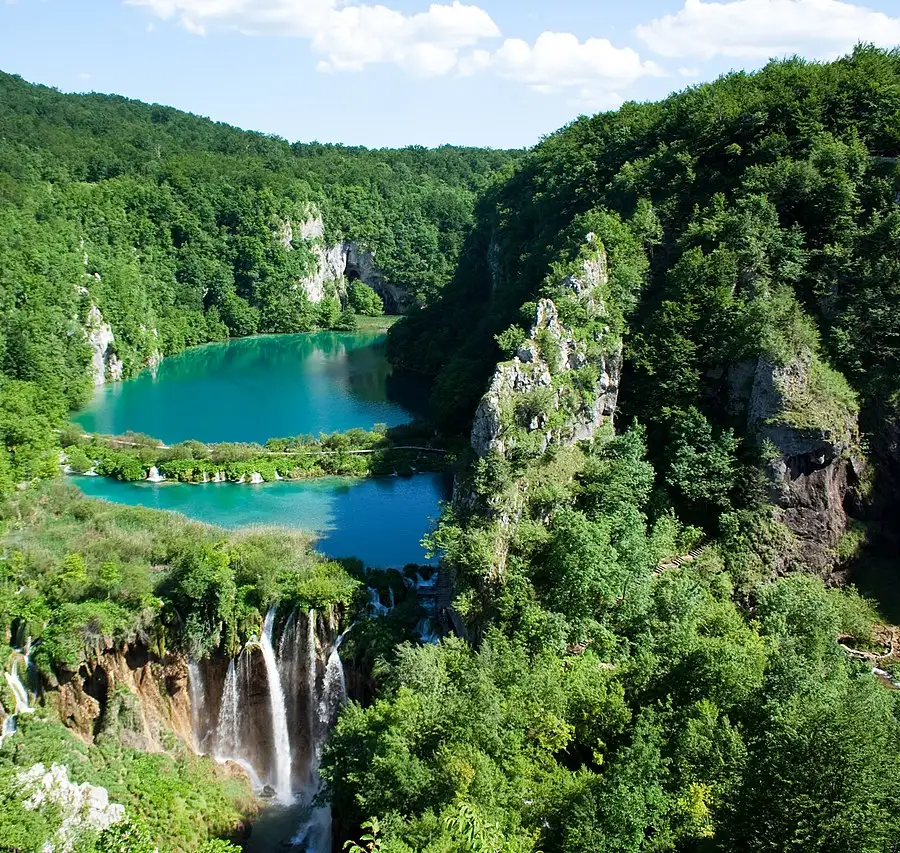
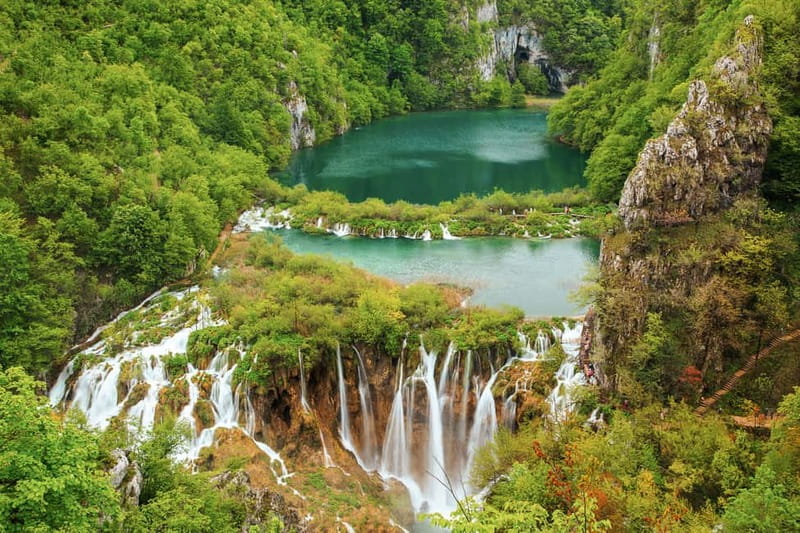
Stand at the lower canyon viewpoint to capture the full height of this limestone cascade. This is a common highlight for those arriving on a zagreb to plitvice lakes day trip.
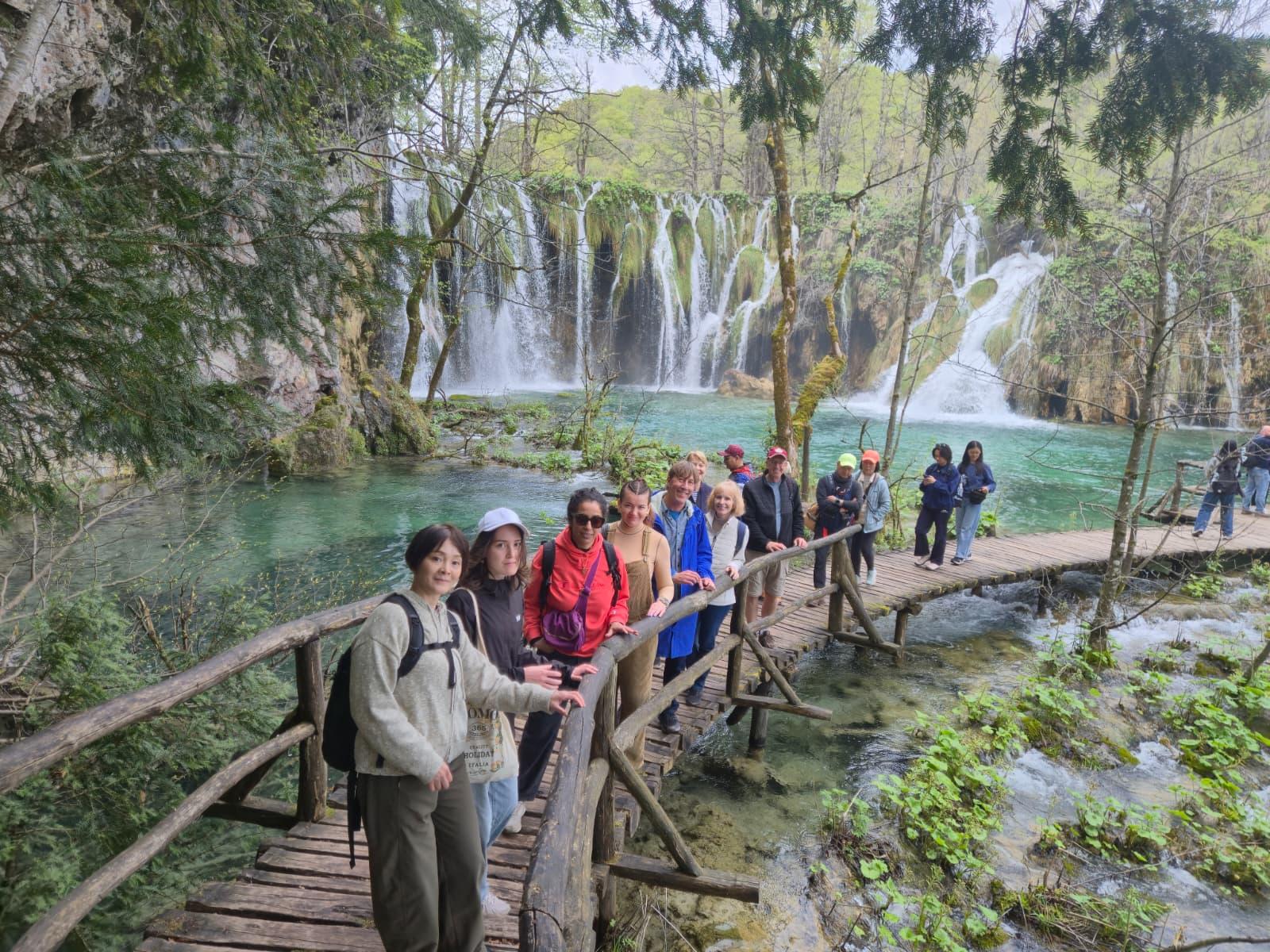
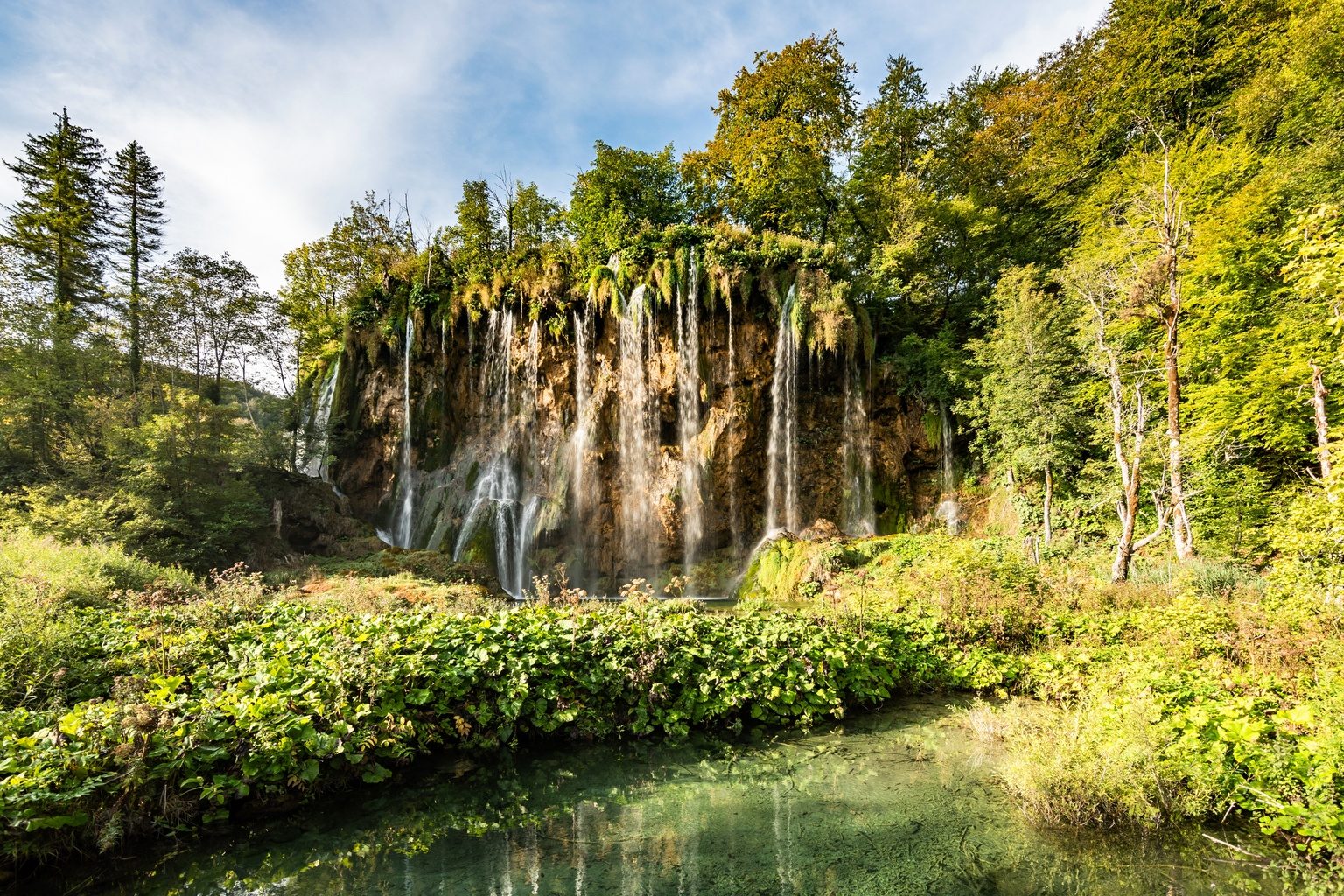
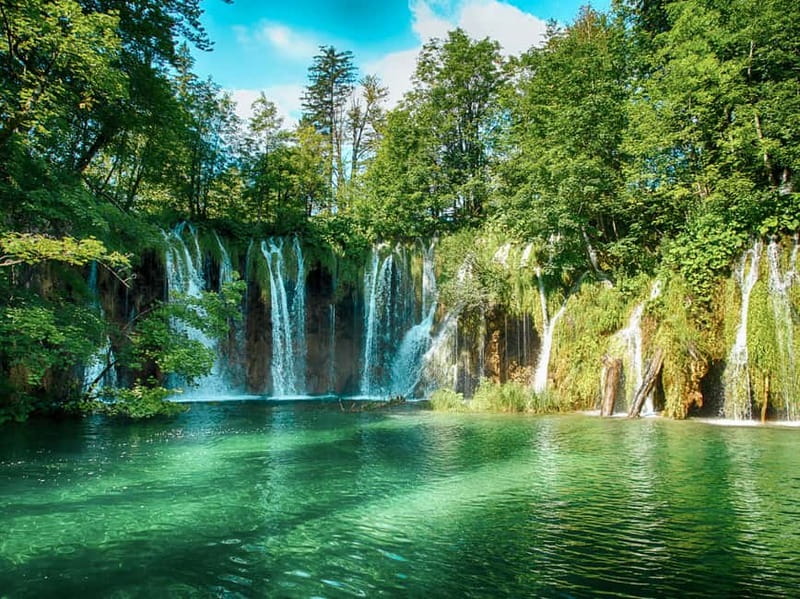
Position yourself on the wooden boardwalks overlooking this wide, terraced waterfall for a composition featuring lush mossy rock formations. Secure your zagreb to plitvice lakes day trip tours early to avoid crowds on these narrow paths.
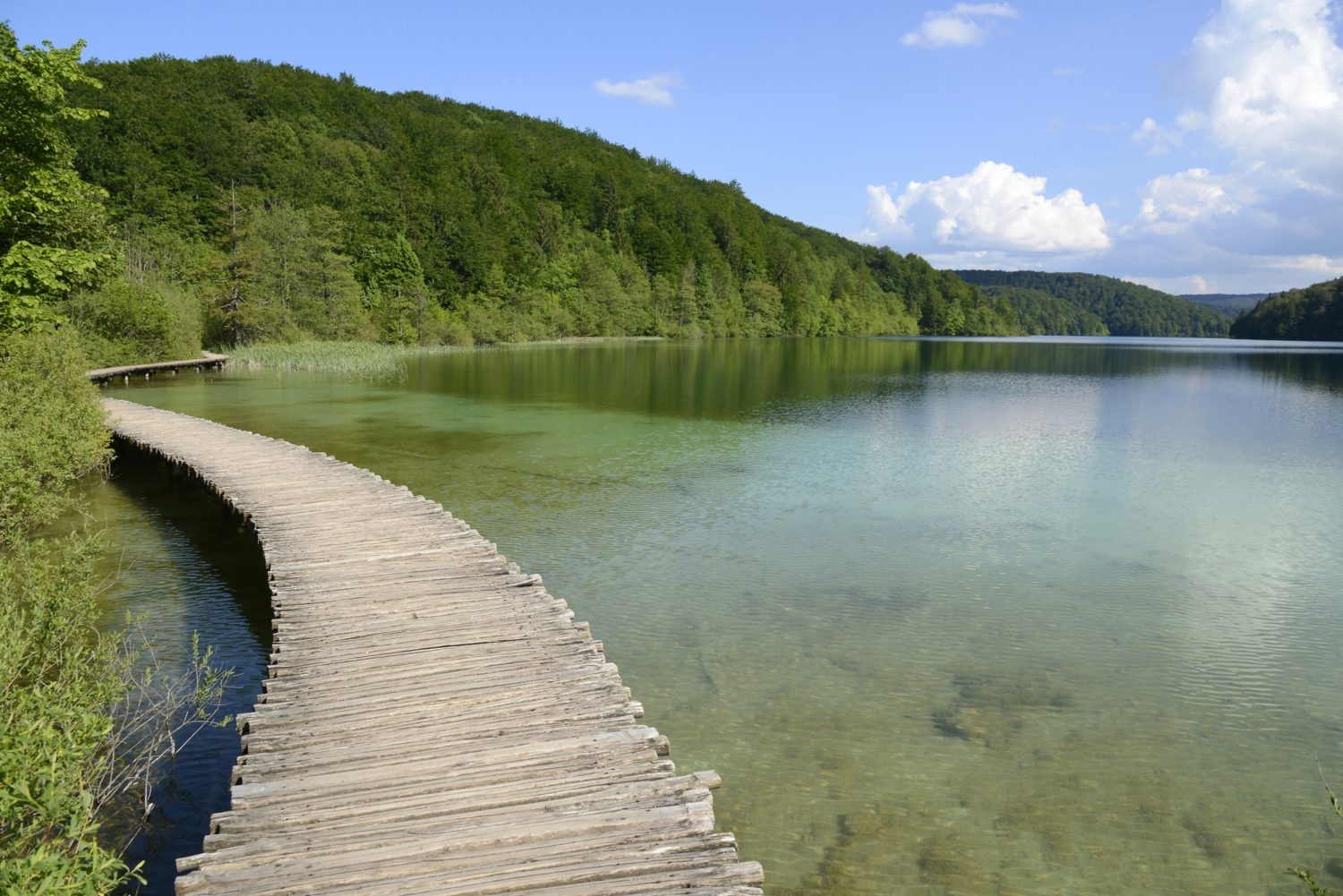
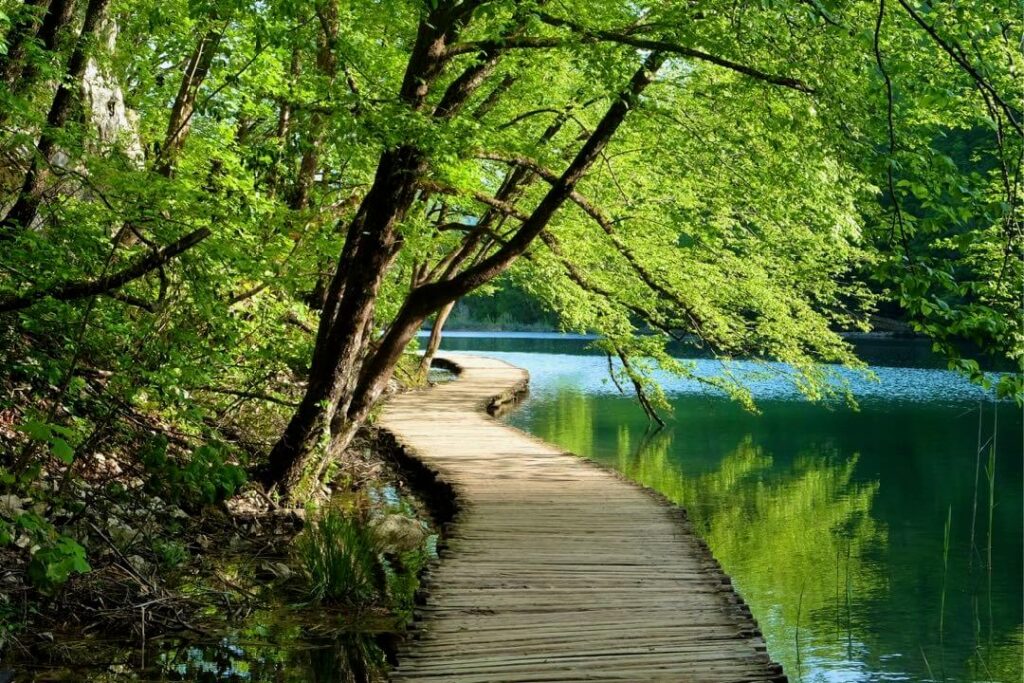
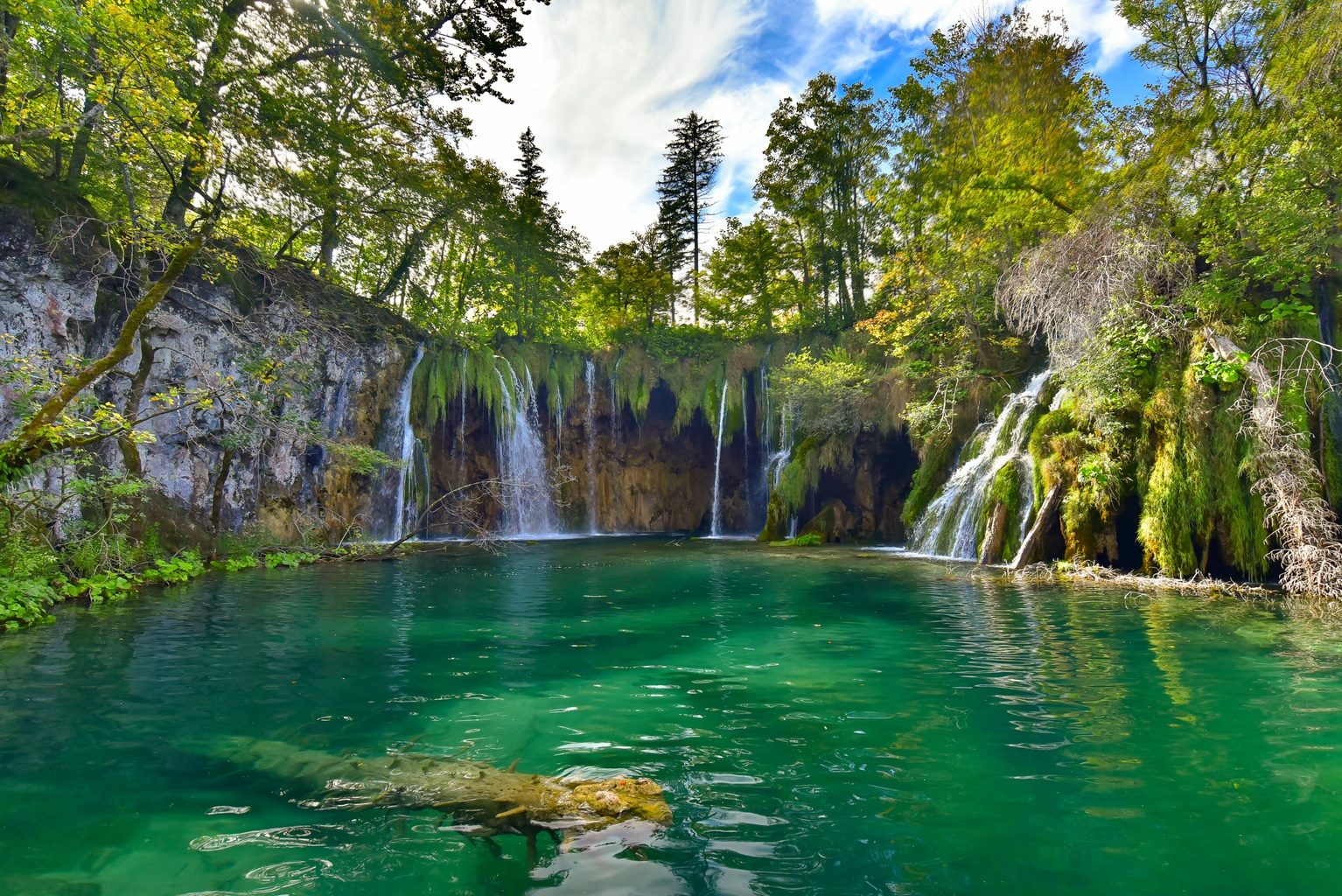
Capture the turquoise water clarity and limestone sediment layering from the wooden paths that wind through the canyon.
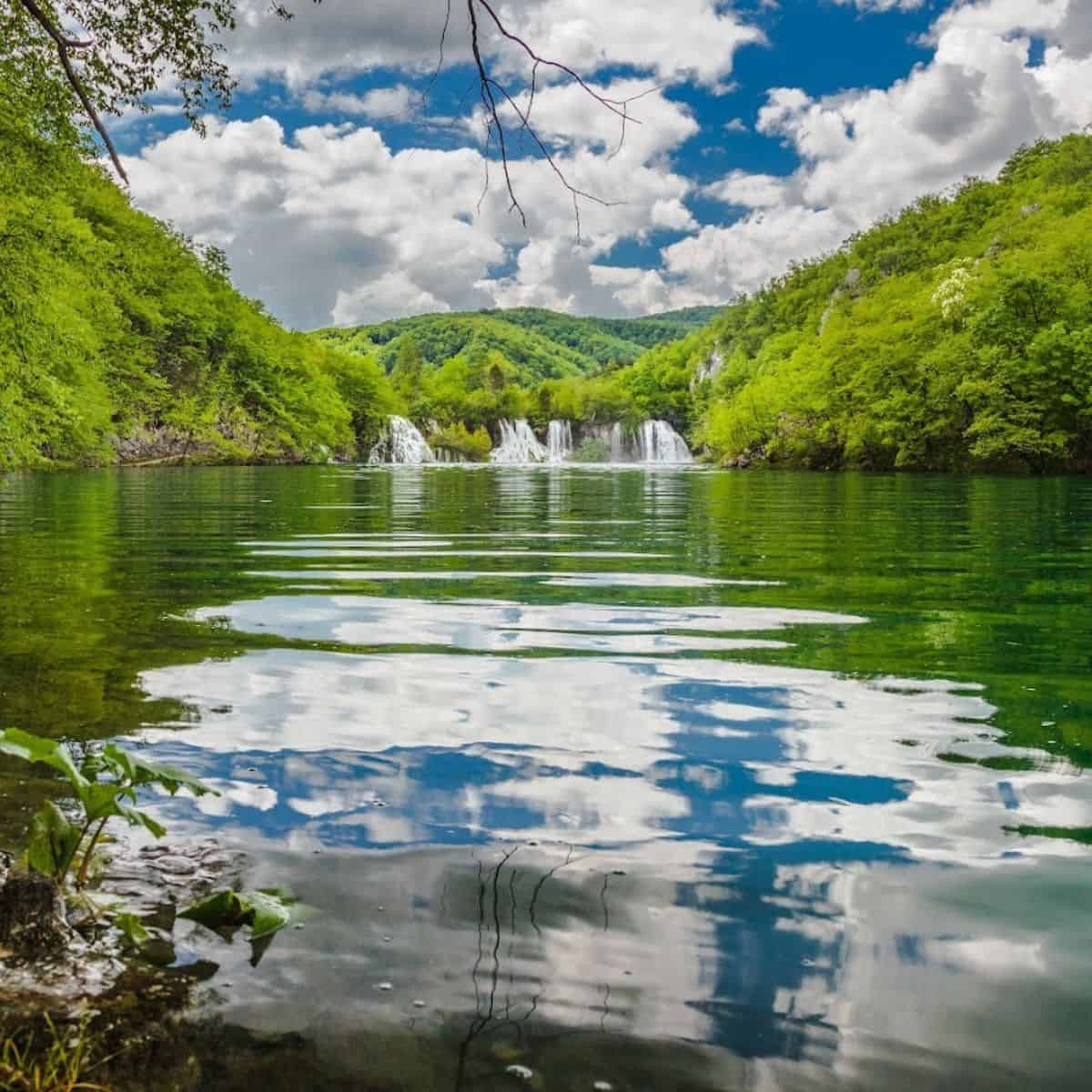
This spot offers a perspective on the dense forest surrounding the cascading water within the Upper Lakes sector. It provides a quiet alternative for photographers looking to document the UNESCO heritage park landscape.
A zagreb to plitvice lakes day trip offers families a chance to explore a natural wonderland of cascading waterfalls and emerald pools, though the terrain requires advance preparation for younger children. While the park is a sensory delight for all ages, keeping a steady pace and focusing on manageable routes ensures a positive experience.
Strollers are not recommended due to uneven terrain, numerous stairs, and narrow wooden boardwalks; bring a baby carrier or hiking backpack for infants and toddlers instead.
To avoid fatigue, plan for frequent breaks and choose shorter loop trails that incorporate the electric boat crossings or panoramic shuttle trains which kids often find exciting.
Carry ample water and snacks for the entire family, as food options are limited to specific service points within the park and along the trails.
Consider booking guided zagreb to plitvice lakes day trip tours to manage logistics, as having a professional guide can help navigate the park's flow and provide educational insights for children.
While the trails are suitable for most ages, ensure children are comfortable with walking on varied surfaces, and always maintain close supervision near the water's edge and along wooden paths.
The wooden paths can become slippery when wet, so ensure everyone has sturdy, slip-resistant footwear and waterproof layers to remain comfortable in the park's changeable climate.
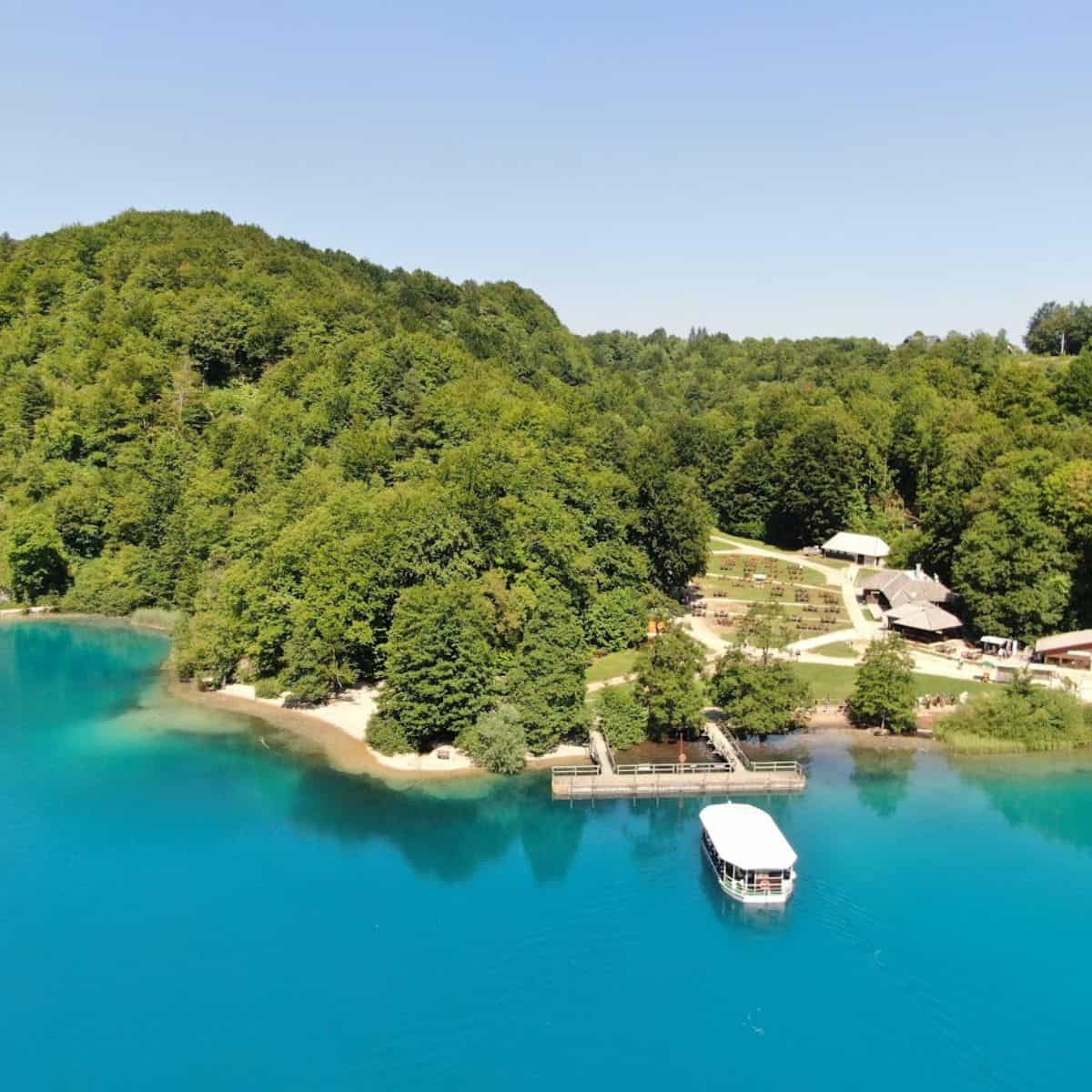
Many travelers on a Plitvice Lakes excursion prefer these on-site spots for their proximity to the wooden walkways and electric boat terminals.
Specializing in regional Lika cuisine, this venue serves traditional lamb and veal dishes prepared under a peka bell. It is a favored choice for those finishing zagreb to plitvice lakes day trip tours who want a hearty sit-down meal.
It is highly convenient if you have secured your zagreb to plitvice lakes day trip tickets early and need an immediate refueling point.
It offers a relaxed atmosphere for visitors returning from their zagreb to plitvice lakes day trip tour before the long drive back.
Everything you need to know for your journey
Yes, you can bring snacks on your zagreb to plitvice lakes day trip, though restaurants are available.
Drones are prohibited on a zagreb to plitvice lakes day trip to protect the Plitvice Lakes ecosystem.
Most travelers spend a full day on their zagreb to plitvice lakes day trip to see all major waterfalls.
Yes, many visitors combine their zagreb to plitvice lakes day trip with a quick stop in Rastoke.
The park offers boat and train segments on your zagreb to plitvice lakes day trip, but many paths involve stairs.
A historic watermill village known for its connection to the river.
Underground formations located near Rakovica with guided access.
Ruins offering panoramic views of the surrounding Lika region.
Conveniently located inside the park area.
Join thousands of happy travelers who have discovered this incredible experience
Book Your Experience Now